
What to Know About Replacing Baseboards After New Flooring
A homeowner guide to baseboard materials, heights, expansion gaps, corner cuts, caulking, and why new floors often require new trim.
Upgrading your floors almost always leaves a gap at the walls. Baseboards cover that gap, protect your drywall, and finish the room. Understanding how trim works with your new flooring ensures a clean final result without visible spaces.
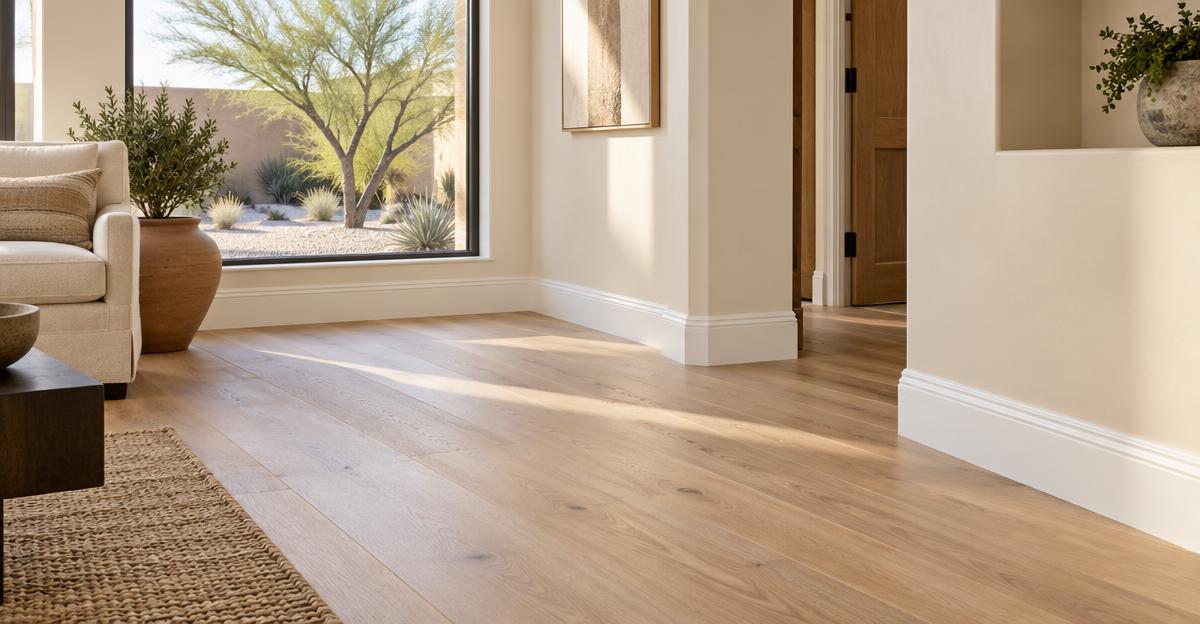
Every hard surface floor needs room to expand and contract. Baseboards hide that necessary space at the perimeter of the room.
When you replace your floors, the old trim usually has to come off. Planning for proper baseboard installation Arizona homeowners can rely on means deciding whether to reuse old materials, upgrade to taller trim, or add shoe molding.
This guide explains the materials, processes, and decisions that go into finishing your flooring project the right way.
What Drives Baseboard Project Costs
Materials
Baseboard pricing depends on the total linear footage needed, the profile height, and whether you choose MDF, finger-jointed pine, or solid wood.
Labor
Measuring, cutting, coping corners, handling sixteen-foot boards, nailing, and securing the boards to the wall studs require precision and time.
Paint and Prep
Filling nail holes, sanding the filler, caulking the top edge against the drywall, and applying the final coat of paint add separate labor steps.
Damage During Demolition
Old baseboards are often glued or heavily caulked to the drywall. Removing them can crack the wood or snap MDF pieces entirely.
Height Differences
If your new floor is thinner than the old one, leaving the baseboards in place will expose an ugly gap underneath the trim.
Water Damage
Old trim near bathrooms, kitchens, or exterior doors often shows hidden swelling or dry rot once removed.
Style Updates
A modern luxury vinyl floor looks out of place next to short, dated, or heavily rounded baseboards from decades ago.
Expansion Gap Coverage
New flooring requires a specific gap at the wall, typically a quarter inch. The trim must be thick enough to cover it completely.
The most common mistake homeowners make is assuming baseboards can stay on the wall during a floor replacement. Unless you plan to add a quarter-round molding, the baseboards must come off. West Valley Flooring Installation
How Baseboard Material is Calculated
Baseboard is sold by the linear foot. Ordering exactly the perimeter of the room will leave you short. You must account for corners, cuts, and the length of the raw boards.
Standard boards arrive in eight, twelve, or sixteen-foot lengths. Using longer boards reduces the number of seams on large walls, but requires a larger vehicle to transport and more skill to maneuver inside the house.
Why You Need a Waste Factor
Corner Cuts
Every corner requires mitering or coping, which consumes extra material to get the angle exactly right.
Scarf Joints
Walls longer than standard board lengths require scarf joints. These angled cuts blend two pieces together but require overlapping material.
Baseboard Material Options
Medium Density Fiberboard (MDF)
MDF is affordable, smooth, and comes pre-primed. It paints beautifully and does not warp, making it the most common choice for dry areas like bedrooms and living rooms.
Finger-Jointed Pine
Real wood stands up better to impacts from vacuum cleaners and shoes. It handles moisture better than MDF and holds nails securely in high-traffic hallways.
Baseboard Materials Compared for Arizona Homes
| Material | Impact Resistance | Moisture Tolerance | Paintability | Best Fit |
|---|---|---|---|---|
| MDF | Moderate. Can dent if hit hard. | Low. Swells if it gets wet. | Excellent. Very smooth finish. | Living rooms, bedrooms, dry hallways. |
| Finger-Jointed Pine | High. Resists standard scuffs. | Moderate. Better than MDF. | Good. May show slight grain. | Whole home, kitchens, busy areas. |
| Solid Pine | High. Very durable. | Moderate. Must be sealed. | Fair. Often stained instead. | Custom homes, stained trim designs. |
| Polyurethane | High. Flexible and tough. | Maximum. Completely waterproof. | Good. Requires specific paint. | Bathrooms, laundry rooms, patios. |
Choosing Baseboard Height
The height of your trim changes the proportions of the room. Tall ceilings demand taller baseboards to balance the visual space.
Three to Four Inches
- Matches traditional builder-grade trim.
- Appropriate for rooms with standard eight-foot ceilings.
- Often features a rounded or classic colonial top edge.
Five Inches and Up
- Creates a custom, high-end appearance.
- Balances rooms with nine-foot or vaulted ceilings.
- Square or stepped profiles look modern and clean.
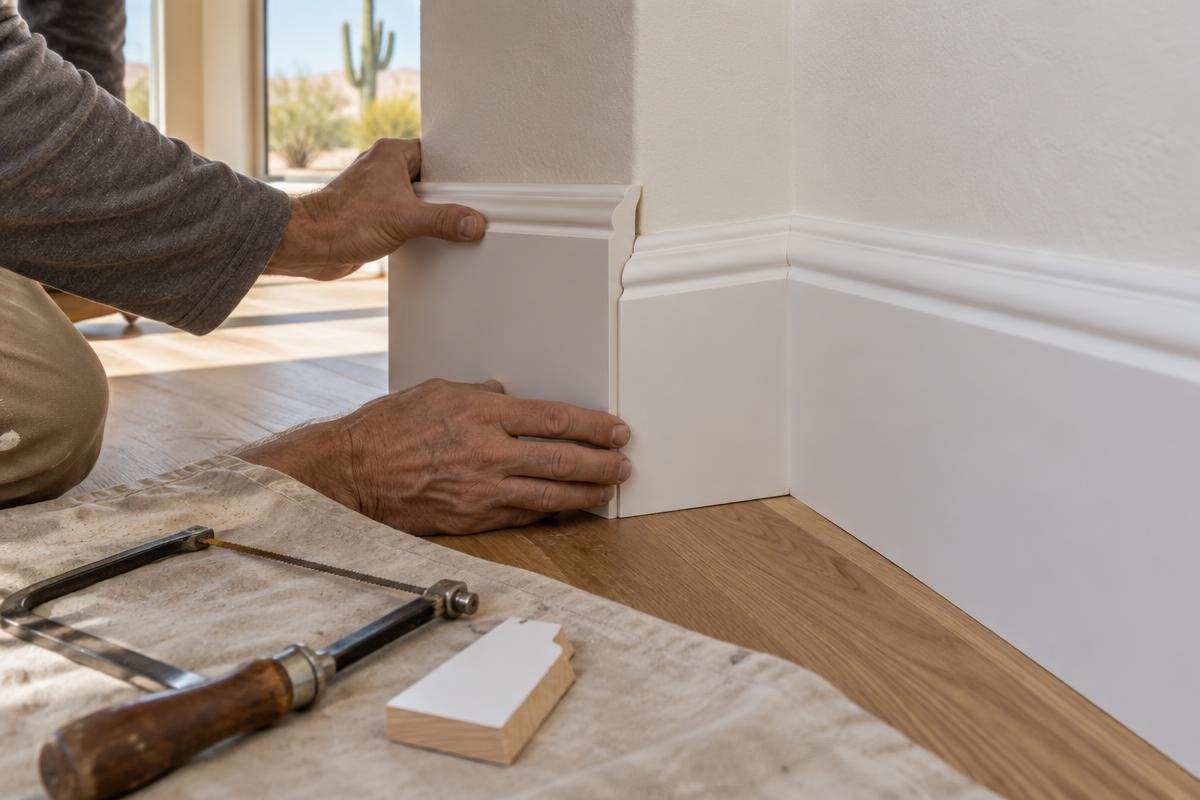
The Installation Process
Measuring
Every wall is measured, accounting for corners and doors. A standard ten percent waste factor is added to the material order.
Cutting and Coping
Outside corners are mitered at forty-five degrees. Inside corners are coped with a specialty saw so the boards interlock perfectly even if the walls are out of square.
Nailing
Boards are attached to the wall studs using an eighteen-gauge brad nailer. Nails are driven slightly below the surface.
Patching
Every nail hole is filled with wood putty, allowed to dry, and sanded smooth so it disappears under the paint.
Caulking
A bead of paintable acrylic caulk seals the gap between the top of the baseboard and the drywall, preventing dust collection.
Painting
A final coat of trim paint provides a hard, washable surface that protects the wood and hides the filled nail holes.
Tear Out and Prep Work
Scoring the Caulk
Old caulk must be sliced with a utility knife before prying. Skipping this step tears the drywall paper off the wall and creates costly repairs.
Pulling the Nails
Old trim is pried gently. Leftover nails are pulled through the back of the board or snipped flush with the wall so they do not block the new boards.
Removing hard surface floors can damage the lower drywall. West Valley Flooring Installation utilizes dustless tile removal, which protects your home from airborne silica dust and keeps the surrounding walls cleaner for the new trim.
Preparing the Walls for New Trim
Scrape Old Caulk
Leftover caulk lines on the drywall will prevent the new baseboard from sitting flush against the wall.
Repair Drywall Paper
Any torn paper needs to be sealed and skim-coated so it does not blister under the new trim paint.
Check Floor Levels
If the new floor has dips, the baseboard may need to be scribed or pushed down to follow the contour of the floor.
Mark the Studs
Locating the wall studs before placing the trim ensures the nails actually bite into solid wood instead of just drywall.
Coping inside corners takes more skill than a simple miter cut, but it is the only way to guarantee the joint stays tight when the wood naturally shrinks. West Valley Flooring Installation
Baseboard Installation Arizona: Climate and Acclimation
Why Acclimation Matters in Phoenix
The extreme dry heat in the desert draws moisture out of wood. Baseboard installation Phoenix professionals know that solid wood trim needs to sit in the air-conditioned house before installation.
If wood baseboards are installed straight off a hot delivery truck, they will shrink as they cool and dry out inside the home. This shrinkage pulls perfectly tight corner joints apart, leaving visible gaps just a few weeks after the job is done.
Common Baseboard Installation Mistakes
Caulking to the floor. Baseboards should never be caulked to a floating floor. The floor needs to move freely underneath.
Skipping the caulk line. Leaving the top gap open against the wall collects dust and looks unfinished.
Mitering inside corners. Square cuts open up as the house settles. Coped corners overlap and hide wood shrinkage.
Using the wrong nails. Thick finish nails can split MDF. Thin brad nails are the correct choice for trim work.
Not painting the trim. Factory primer is not a finish coat. It will scuff and absorb dirt instantly.
Ignoring wavy walls. Nailing rigid baseboard to a bowed wall leaves massive gaps. Flexible trim or careful fastening is required.
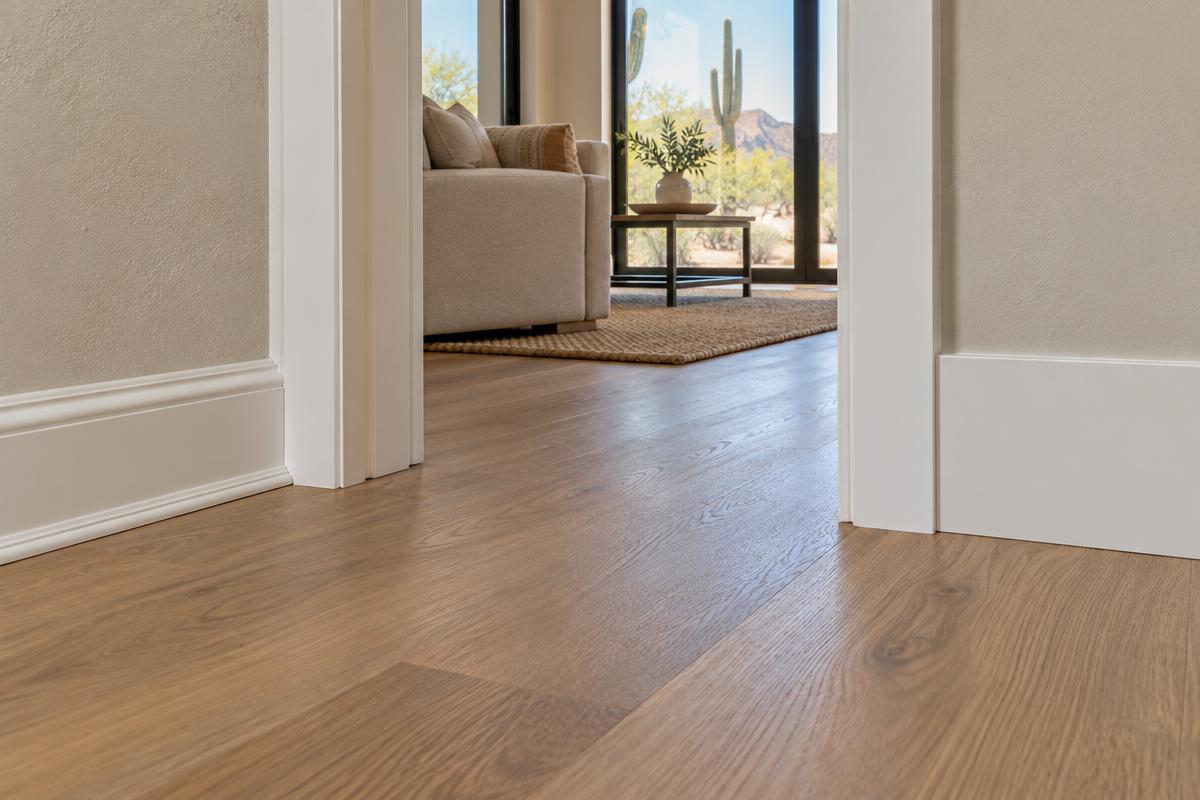
Handling the Floor Gap: Shoe Molding vs. Baseboards
Leaving Old Trim in Place
- Keeps the original baseboards attached to the wall.
- A small piece of shoe molding is nailed to the baseboard to cover the expansion gap.
- Lowers the labor cost of the flooring project.
- Adds a layered, traditional look to the trim profile.
Starting Fresh
- Provides a clean, modern aesthetic with a single piece of trim.
- Allows you to upgrade to a taller profile.
- Eliminates the layered, busy look of shoe molding.
- Ensures there is no hidden water damage behind the old wood.
What a Baseboard Quote Should Include
Get the Scope in Writing
- The exact material type, height, and profile style being ordered.
- Who is responsible for removing and disposing of the old trim.
- Whether inside corners will be coped or mitered.
- If the quote includes filling nail holes and sanding the filler.
- If top edge caulking is included in the price.
- Who is responsible for the final coat of paint.
- If shoe molding is required for uneven floors.
- How transitions around door casings will be handled.
- If the work covers closets and pantries, not just main rooms.
Red Flags in a Trim Quote
Unspecified Materials
A quote that just says new baseboards without listing MDF or pine leaves you vulnerable to cheap, easily damaged materials.
Paint Excluded Without Warning
Many flooring companies install the trim but leave it unpainted. Make sure you know if you need to hire a painter separately.
Square Footage Pricing
Baseboard installation West Valley AZ contractors should price the job by the linear foot, not the square foot of the room.
No Acclimation Time Allowed
If the contractor plans to deliver and install solid wood trim on the exact same day in July, expect your corner joints to shrink and crack.
If you are planning a complete flooring remodel, review our guide to choosing a local flooring contractor versus big box store to see how trim labor is handled differently by corporate retailers.
Frequently Asked Questions
Can I reuse my old baseboards after getting new floors?
You can reuse them if they are removed carefully without breaking, but it is labor-intensive. Most old baseboards get damaged during removal, making new trim a faster and cleaner option.
Do I install baseboards before or after the new floor?
Baseboards must be installed after the new floor. They sit directly over the edges of the flooring to cover the necessary expansion gap at the perimeter of the room.
Should I paint the baseboards before or after installation?
It is best to apply one coat of paint before installation, then fill the nail holes, caulk the edges, and apply a final touch-up coat once they are secured to the wall.
What is the difference between shoe molding and quarter-round?
Quarter-round is exactly a quarter of a circle, which makes it bulky. Shoe molding has a taller, narrower profile that blends into the baseboard much more cleanly.
Does MDF baseboard swell if it gets wet?
Yes. MDF acts like a sponge when exposed to standing water. For bathrooms and laundry rooms, solid pine or polyurethane baseboards are much safer choices.
Flooring and Trim Services Across the West Valley
West Valley Flooring Installation provides expert flooring and baseboard replacement for homes throughout the region. We ensure your new floors and trim are installed correctly the first time.
Our services include luxury vinyl plank, tile, laminate, subfloor prep, and precision baseboard installation.
Finish Your Flooring Project the Right Way
Do not let bad trim ruin the look of your beautiful new floors. Get a complete quote that includes professional baseboard installation, proper corners, and clean caulking.
West Valley Flooring Installation offers free estimates throughout the West Valley.
